Wrap Dress Fit: How to Tell If It Should Sit Differently
Quick Answer: A wrap dress should sit at your natural waist, keep its neckline closed when you move, and hang smoothly over the hips without pulling. If the top gapes, the waist rides up, or the skirt twists to one side, the fit is off. Check the waist placement first, then the tie, then the length. Small changes to the tie and the strap often solve most fit problems without a tailor.
You tried on the wrap dress in the store and it looked perfect. At home, after an hour of sitting and walking, the neckline drifts open and the skirt swings to one side. You start to wonder whether the dress is wrong or whether you are. In most cases, the dress is fine and the fit simply needs a closer look.
This is general style guidance. Fit varies by brand, fabric, and body shape, so trust how the dress feels when you move.
Where should a wrap dress waist sit?
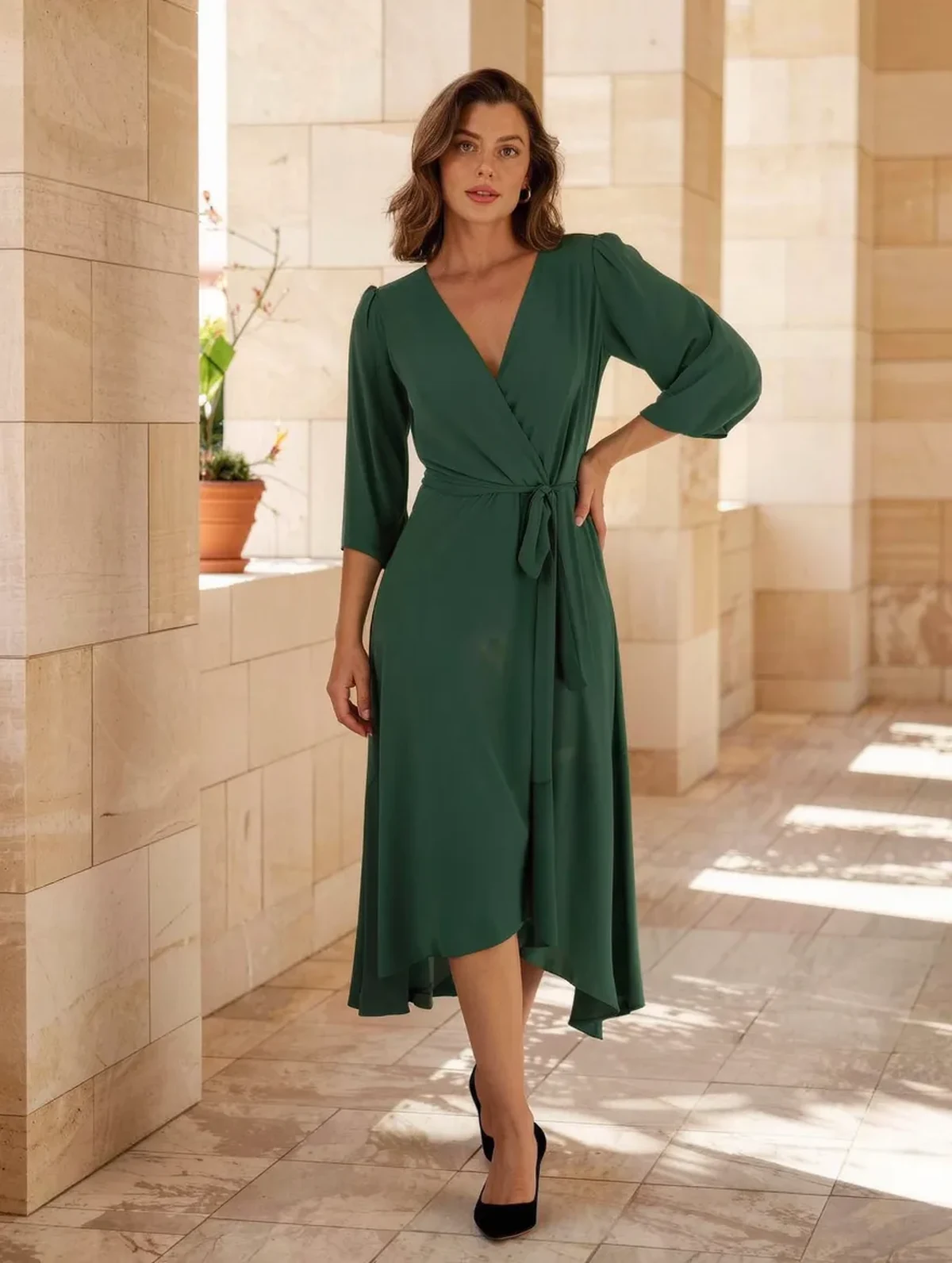
The waist seam or the tie should sit at your natural waist, the narrowest part of your torso, usually just above the belly button. If the seam sits too high, the bodice can feel tight under the bust and the skirt can look short. If it sits too low, the dress can look shapeless and the wrap can slide open.
Stand in front of a mirror and tie the wrap at the position that feels natural. Look for a clean line where the bodice meets the skirt. A waist that sits level with your natural waist makes the dress look balanced from the front and the side.
If you are between sizes, choose the one that keeps the waist in the right place and let a tailor adjust the length later. The waist is the hardest part to change, so get it right first.
Why does my neckline gap when I move?
Gaping often comes from three causes: the wrap is too loose at the bust, the tie is too short, or the fabric is too light to hold its shape. A bust that is larger than the bodice was designed for will pull the wrap open, especially when you lean forward or raise your arms.
Test the fit by sitting, reaching overhead, and leaning forward. If the neckline opens, try a few small fixes. Move the tie to a slightly tighter position, add a discreet bust tape or clear fashion tape along the inside edge, or ask a tailor to add a small inner snap or hook. A lined dress or a thicker fabric also holds the line better.
A neckline that stays closed through movement is the sign of a good fit. If it still gaps after all of these, the dress may simply be the wrong size for your bust.
Myth vs Fact: A Wrap Dress Should Always Be Tied Tight
Myth: Pull the tie tight and the dress will stay put. Fact: Over-tightening pulls the fabric and can make the neckline gap or the waist look strained. Tie it snug enough to hold, then check the line.
Myth: Any wrap dress fits any body shape. Fact: Different wrap cuts sit differently on the bust, waist, and hips. A deeper wrap may suit some shapes better than others, so look for a version that matches your proportions.
Myth: A tailor cannot change a wrap dress. Fact: Many tailors can adjust the tie placement, add an inner hook, or shorten the hem. Small fixes are often easier than people expect.

How do I check the skirt and hem?
Walk, sit, and turn in the dress. The skirt should swing with you without twisting to one side. If the wrap drifts toward the front or back, the tie may be anchored off-center, or the skirt may be cut with an uneven drape.
The hem should sit at a length that suits your style and occasion. A midi length, around the middle of the calf, is flattering on many shapes. Check the length in heels and flats, since the look changes with footwear.
If the skirt pulls across the hips when you sit, the fit is too snug in that area. Choose a size up, or pick a cut with more room through the hip.
5 Fit Checks Before You Commit
- The sit test. Sit down, cross your legs, and check that the neckline stays closed.
- The reach test. Raise your arms overhead and see whether the bodice pulls or gaps.
- The walk test. Take a full lap of the room and notice any twist or drift in the skirt.
- The tie test. Tie the wrap at your natural waist, then check that the knot stays put.
- The mirror test. Look at the side view as well as the front, since many wrap fit problems show up from the side.
FAQ: Wrap Dress Fit, Answered
Can I fix a gaping neckline myself?
Often, yes. Try a snug tie, fashion tape, or a discreet inner hook. Test each fix while you move before deciding.
Does a wrap dress work for every body type?
Many people look great in a wrap dress. The key is finding a version that sits at your waist and suits your bust and hip proportions.
Should I buy a wrap dress one size up?
Only if the waist sits in the right place and the bodice holds closed. A bigger size that gaps everywhere is not a better fit.
This is general style guidance. Fit varies by brand, fabric, and body shape.
TL;DR:
- The waist seam or tie should sit at your natural waist.
- The neckline should stay closed when you sit, reach, and walk.
- Tie the wrap snug, not tight, and use fashion tape or an inner hook if needed.
- Check the skirt for twist and the hem for the length that suits you.
A well-fitted wrap dress looks effortless because it holds its shape through the whole day. Check the fit in motion, and let the dress do the rest.
Keep Reading
This article is for general styling and informational purposes only. Trends, sizing, availability and pricing may vary by brand and season.