The Sleeve Is the Only Part of a Dress That Changes Everything From the Elbow Up
Quick Answer: The sleeve sets a dress’s register more than the hemline or neckline does. A structured shoulder reads authoritative, a gathered puff reads romantic, a bishop sleeve reads bohemian, and a cap sleeve reads classic — on an identical dress body. Choose the sleeve for the mood you want to project, and when a sleeve is genuinely dramatic, keep everything else quiet and let the arm be the whole outfit.
Stand in front of a rack of dresses and watch what your hands do. You check the length. You check the neckline. You hold it up against yourself to see the shape.
You almost certainly do not look at the sleeve until you’ve already decided.
Which is odd, because the sleeve is the part that decides. Take one dress body, swap only what happens from the elbow up, and you get four different dresses — one for a board meeting, one for a garden party, one for a music festival, one for a funeral. Nothing else changed.

How Does the Sleeve Change the Whole Dress?
A neckline frames your face. A hemline sets formality. The sleeve sets posture and attitude — and posture is what people read first, from across a room, before they’ve registered a single other detail.
Here’s the same dress body, four ways:
- Structured or padded shoulder — authority, formality, intent. It squares the frame and makes you read as taking up space on purpose.
- Gathered puff — romantic, youthful, soft. Volume high on the arm shrinks the waist by comparison and lightens the whole register.
- Long fluid bishop — bohemian, unhurried, a little theatrical. Movement at the wrist reads as ease.
- Clean cap or short set-in — restrained, classic, ageless. The most neutral of the four, which is exactly its usefulness.
This is why two dresses with identical bodies can occupy completely different worlds, and why the sleeve deserves to be the first thing you consider rather than the last. The sleeve is the only part of a dress that tells people how to interpret the rest of it.

How Do You Choose the Right Sleeve for an Occasion?
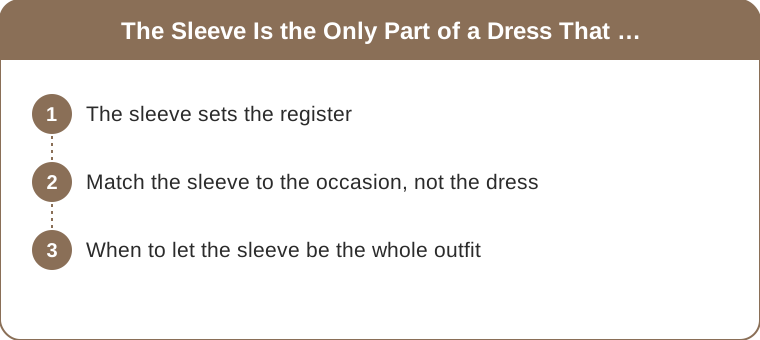
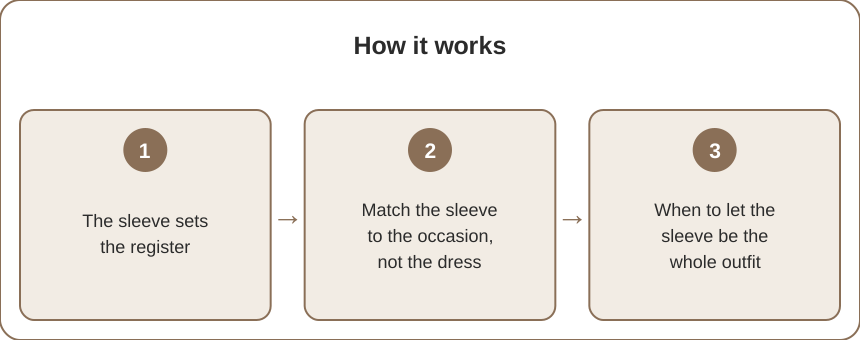
Match the sleeve to the room, not to the dress.
For presence and authority — a defined, architectural shoulder. Job interviews, presentations, any room where you want the first impression to be competence. A structured shoulder does more work than any necklace ever will, and it does it before you speak.
For romance and ease — something soft and flowing at the arm. Summer evenings, weddings you’re attending rather than running, dinners that go long. Fabric movement reads as relaxed even when you’re not.
For a look that needs nothing else — a dramatic sleeve is itself the accessory. If you’re getting dressed in eight minutes and want the result to look considered, a strong sleeve is the fastest route there.
For a foundation you’ll build on — a quiet sleeve. Cap, short set-in, or simple long. This is the one to buy if you own a lot of jewelry, because it leaves room for it.
The habit worth building: decide the register first, then find the sleeve that delivers it. Most people do the reverse — buy the dress, then try to talk the outfit into the mood they wanted.
When Should the Sleeve Be the Whole Outfit?
When it’s loud enough to finish the argument on its own — and you’ll know, because it’s the first thing you noticed on the hanger.
Sculptural, voluminous, ruffled, exaggerated: with a sleeve like that, resist everything. Minimal jewelry, a clean shoe, a quiet bag, hair off the face so the shoulder line stays visible. The most common mistake with a statement sleeve is competing with it. The most sophisticated move is trusting it.
There’s a practical reason too, beyond taste. A big sleeve occupies the same visual zone as earrings, necklaces, and shoulder bags. Adding those doesn’t layer the look — it crowds one small area and makes the sleeve read as accidental rather than chosen.
A bold sleeve with an otherwise pared-back outfit is one of the easiest ways to look thoroughly considered while actually doing very little. Which is, more or less, the entire art of getting dressed.
What Nobody Tells You About Statement Sleeves
Dramatic sleeves have logistics. A bishop sleeve will find your soup. A voluminous puff won’t fit under most coats without crushing. If the evening involves eating at a table or a cloakroom, factor it in — not as a reason to skip the sleeve, but so you’re not surprised at the restaurant.
The armhole matters more than the sleeve. A high, narrow armhole lets you lift your arms; a low one pulls the entire dress up when you reach. Check this in the fitting room by raising both arms overhead. Beautiful sleeves attached to bad armholes are the most common reason a dress hangs unworn.
Volume high, volume low — pick one. A big sleeve with a big skirt is a lot of dress. It works occasionally and deliberately, and it fails often. If the skirt has volume, keep the sleeve close to the arm.
Sleeves date faster than silhouettes. The exaggerated shoulder cycles hard, roughly every fifteen years. A cap sleeve or a clean long sleeve doesn’t. If you’re buying one dress to keep for a decade, buy the quiet sleeve and let the loud ones be the fun purchases.
Tailors can change sleeves. Not cheaply, and not on every dress, but a sleeve can be shortened, narrowed, or removed entirely more often than people assume. A dress you love with a sleeve you don’t is sometimes a fixable problem.
Mini FAQ
What sleeve style is most flattering?
The one that balances your proportions rather than the one with the best reputation. Volume at the shoulder broadens the upper body and narrows the waist by contrast; a fitted sleeve keeps the line vertical and lengthening. Three-quarter length is the most universally useful because it exposes the narrowest part of the forearm, which reads as slimming on almost everyone.
Are puff sleeves still in style?
They’ve moved from peak trend to established option, which is the better place for them. The exaggerated versions have softened into gentler gathered shoulders that read modern without dating a photo to a specific year. A moderate puff is a safe buy right now; an extreme one is a fun buy.
Can you wear a statement sleeve to work?
Yes, if it’s structured rather than voluminous. An architectural shoulder or a neat gathered cap works in almost any professional setting. Very full bishop or bell sleeves are harder — practically, because keyboards and handshakes, and tonally, because they read leisure. Save those for after six.
TL;DR:
- The sleeve sets a dress’s whole register — authority, romance, bohemian, or classic — with nothing else changed.
- Choose the sleeve for the room you’re walking into, not for the dress it came attached to.
- A dramatic sleeve is a finished statement: minimal jewelry, clean shoe, quiet bag.
- Check the armhole, not just the sleeve — a low armhole makes a beautiful dress unwearable.
- Loud sleeves date, quiet sleeves don’t; buy accordingly depending on how long you want to keep it.
Stop editing dresses from the hem up and start reading them from the elbow up. The most expressive detail in your closet has been hiding in plain sight on your arm.
Keep Reading
This article is for general styling and informational purposes only. Trends, sizing, availability and pricing may vary by brand and season.