Why Knitted Dresses Stretch Out by the Afternoon
Quick Answer: Knitted dresses stretch during wear because the yarn relaxes under your body heat and your own weight, and loops that have been pulled open do not spring back on their own. Viscose, rayon and modal stretch the most and recover the least; wool and cotton with a few per cent elastane recover best. Most of the sag disappears when the dress is left flat to rest overnight, which is why the same dress fits again the next morning. Buying a knit dress that fits snugly at the start is not a mistake — it is the only way it fits by evening.
You put it on and it skims. You catch yourself in a shop window at four o’clock and the waist has dropped, the hem sits lower, and the seat has gone slightly baggy. Nothing has happened to your body in six hours. What has happened is that a knitted fabric is a structure of loops, and loops have been quietly opening all day.
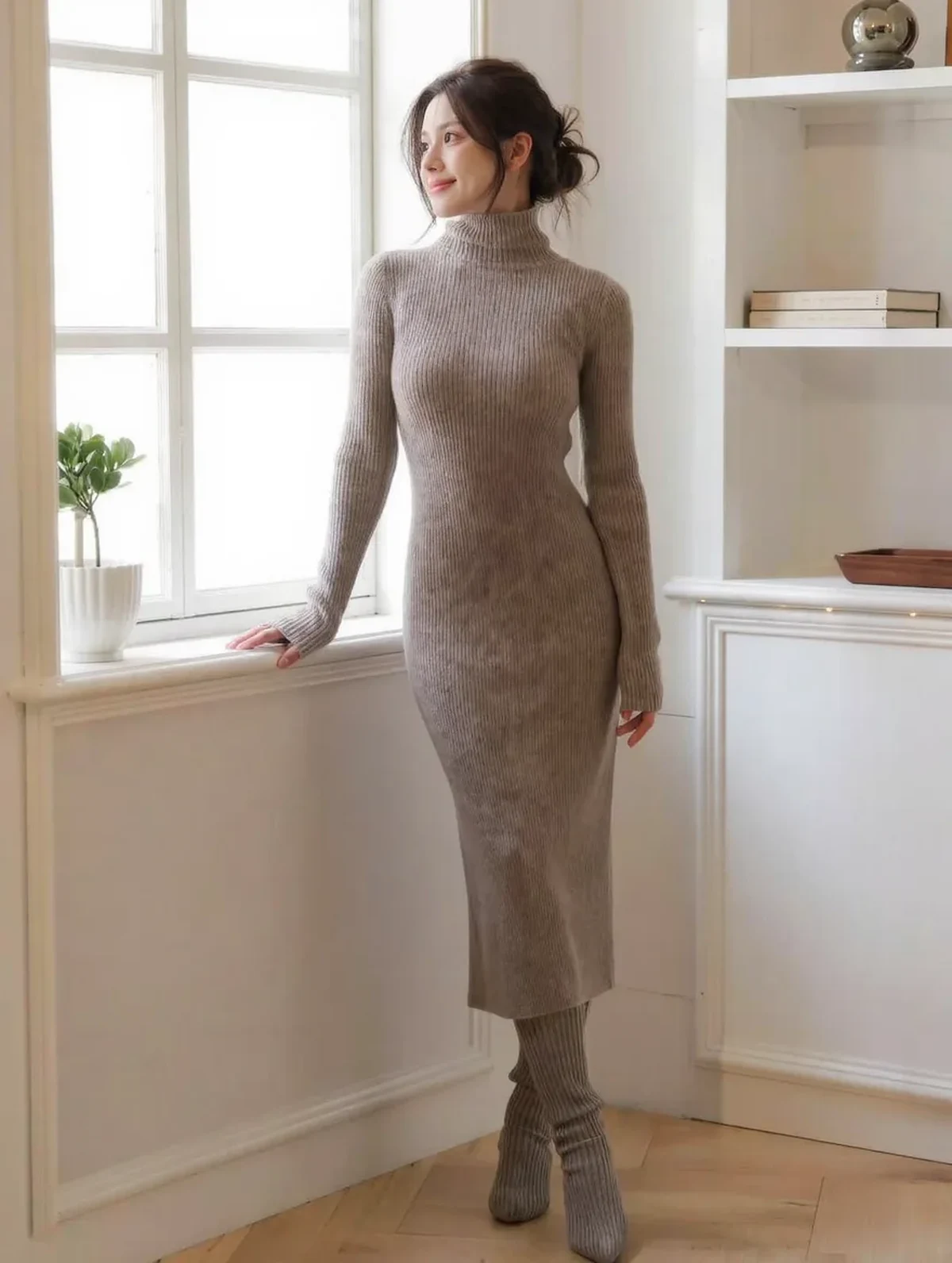
What actually happens to a knit dress during a day of wear?
A woven fabric is threads crossing at right angles, which is a rigid grid. A knit is one long yarn looped through itself, and loops can deform.
Three things pull those loops open over a day. Body heat softens the fibre, particularly anything cellulose-based. Your own weight hangs the dress downward from the shoulders, which is a constant low load in one direction. And every time you sit, reach or cross your legs you stretch specific areas past their resting shape.
The result is predictable and always in the same places. The seat, the knees, the elbows and the point just below the bust — the four spots that carry the most repeated load. A knit dress rarely stretches evenly; it stretches where you bend.
Recovery is the word that matters. Every knit stretches. What separates a good one from a disappointing one is whether the loops return to their original shape when the load comes off. A yarn with good recovery snaps back within an hour of being taken off; a yarn with poor recovery holds the new shape, and each wear moves the starting point a little further.
This is also why the fit seems fine again next morning. Most of what you saw at four o’clock was temporary relaxation, not permanent damage, and lying flat overnight is what resets it.
Which knit fabrics hold their shape and which do not?
The fibre content label predicts this better than the price does.
Viscose, rayon, modal and bamboo stretch the most and recover the least. They are lovely to wear — cool, fluid, beautifully draping — and they are the reason so many knit dresses look wonderful in the fitting room and defeated by dinner. They also weaken when wet, which is why these dresses sag further after washing.
Merino and other fine wools have genuinely good recovery, because wool fibre is naturally springy and returns to its crimped shape. A merino knit dress will stretch during the day and be back to itself by morning, reliably, for years.
Cotton stretches moderately and recovers poorly on its own. A pure cotton knit dress tends to grow at the seat and stay grown. Cotton with three to five per cent elastane is a different garment entirely.
Elastane is the recovery ingredient, and a small percentage does most of the work. Two to five per cent transforms the behaviour of almost any knit. More than about eight per cent starts to feel like activewear and can go slack after repeated washing at high temperatures.
Structure matters as much as fibre. A tight rib recovers better than a loose jersey of identical yarn, because the ribs themselves act like springs. A chunky loose knit has long floppy loops with nothing holding them, which is why heavy oversized knit dresses drop hem length so visibly across an evening.
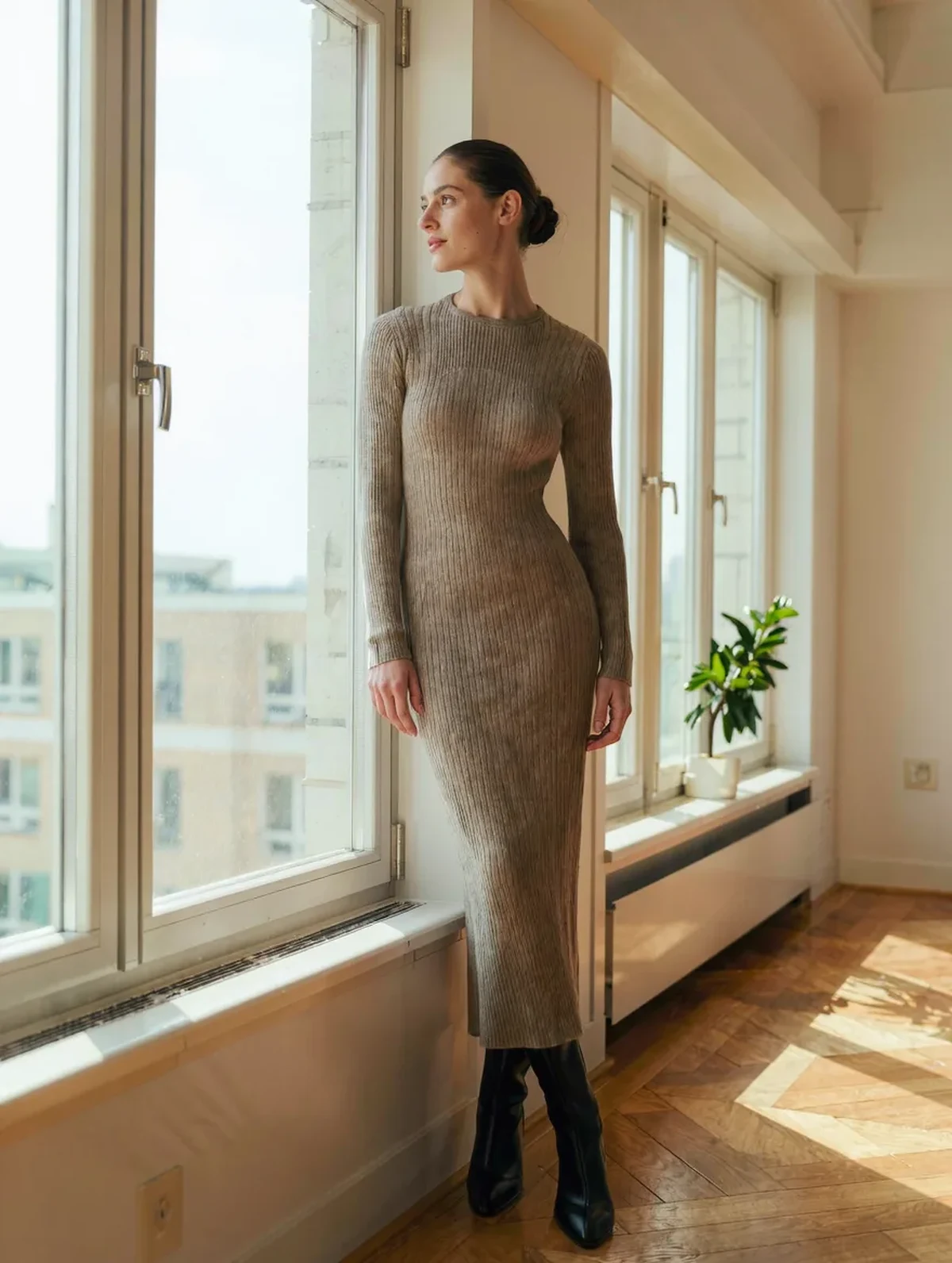
5 Mistakes That Make Knit Dresses Stretch Faster
1. Hanging them. This is the big one. A knit dress on a hanger spends every hour between wears being pulled downward by its own weight, and the shoulders and neckline take all of it. Fold knit dresses and store them flat or over a bar — a hanging knit dress is stretching even when you are not wearing it.
2. Buying a size up because it feels snug in the shop. A knit that is comfortable and slightly firm at the start will be exactly right by afternoon. A knit that is comfortable at the start will be loose by afternoon. The third mistake on this list surprises even people who know this one.
3. Washing warm. Heat relaxes fibre, and warm water plus a full spin is the fastest way to turn a temporary stretch into a permanent one. Cool water, gentle cycle, and the shape lasts several times longer.
4. Drying it hanging or in the machine. A wet knit is at its heaviest and weakest, so hanging one wet stretches it more in two hours than a week of wear does. Dry flat, reshaped by hand, every time — this single habit does more than every other fix combined.
5. Wearing the same knit dress on consecutive days. Fibre recovery is not instant. Wool in particular needs roughly twenty-four hours flat to return to shape, and a dress worn two days running starts the second day already stretched.
How do you choose and wear a knit dress that holds?
Read the composition before you look at the price. A wool or wool-blend knit with a few per cent elastane at a moderate price will outlast a luxury viscose knit dress at three times the cost, in terms of how it looks by evening.
Pull the fabric gently in the shop and watch it come back. Take a section at the side seam, stretch it a few centimetres, let go, and look. Good recovery is visible within a second or two. If the stretched area stays visibly slack, that dress will be baggy at the seat by the end of its first outing.
Check the seat area specifically when you try it on. Sit down for a full minute, stand up, and look in the mirror. Almost nobody does this, and it tells you more about the dress than anything else in the fitting room.
Buy it snug through the body and true at the shoulders. Shoulders are the one place a knit does not need growing room, because that is where the weight hangs from — a neckline that is even slightly wide at the start will be wide and drooping later.
And use a slip underneath in autumn. A smooth lining layer stops the knit gripping your tights and being dragged out of place with every stride, which is a surprisingly large part of why knit dresses twist and ride up on cold days. It also stops the static that arrives with tights in October.
FAQ: Knit Dress Questions, Answered
Can a stretched-out knit dress be brought back?
Partly, and it depends on the fibre. Wool responds well: hand wash cool, press the water out in a towel without wringing, then dry flat reshaped to the measurements you want. Viscose and rayon rarely recover fully, because the fibre itself has been permanently deformed rather than just relaxed. A steamer helps more than an iron for either, since heat plus weight is what caused the problem in the first place.
Does a knit dress stretch permanently or only for the day?
Both, in different proportions. Most of what you see by afternoon is temporary and resets overnight. A small amount is permanent each wear, which is why a two-year-old knit dress fits differently from a new one. Good fibre and flat storage mean the permanent share stays tiny.
Is a lined knit dress better?
Generally yes for shape, because the lining carries some of the weight and stops the knit dragging on what is underneath. The trade-off is that a lining can restrict the stretch that made a knit dress comfortable in the first place, so check you can sit and walk normally before deciding it is the safer buy.
TL;DR:
- Knits stretch during wear because body heat and your own weight pull the loops open; how much comes back depends entirely on the yarn.
- Viscose, rayon and modal stretch most and recover least; wool and cotton with a few per cent elastane recover best.
- Hanging a knit dress stretches it around the clock — fold it, and always dry it flat and reshaped.
- Buy it snug and check the seat after sitting for a minute, because that is how it will look by four in the afternoon.
The dress that still looks right at the end of a long day is not usually the more expensive one. It is the one whose fibre was chosen to come back — and that is written on a label you can read before you get to the till.
Keep Reading
This article is for general styling and informational purposes only. Trends, sizing, availability and pricing may vary by brand and season.